Can You Get Dental Implants with Bone Loss in Plainview, NY?
March 2026
Key Takeaways
- Jawbone loss is common after losing teeth but does not automatically disqualify you from getting dental implants.
- Advanced techniques like bone grafting and sinus lifts can rebuild your jaw to create a strong foundation.
- Modern options such as zygomatic implants or All-on-4 use existing bone or nearby structures for stability.
- 3D imaging is a vital step to assess your bone volume and create a custom treatment plan.
- Dental implants help stop further bone resorption by providing the stimulation your jaw needs.
Have you ever looked in the mirror and noticed your face looks a bit different after losing a tooth? Maybe you have heard that your jawbone is shrinking, and you are worried that you missed your chance for a permanent smile. It is a common fear. Many people in Plainview believe that if they have experienced jawbone deterioration, they are stuck with loose dentures forever. You might feel discouraged if a dentist told you years ago that you were not a candidate for implants. However, dental technology has changed significantly. Today, having less bone does not mean you have to settle for a smile that slips or clicks.
What This Article Covers
- Understanding Jawbone Deterioration and How It Happens
- Can You Get Dental Implants with Bone Loss in Plainview, NY?
- Dental Implant Solutions with Bone Loss: Advanced Surgical Techniques
- Implant Options with Bone Loss for Severe Cases
- Why Long-Term Oral Health Depends on Stopping Bone Resorption
- Risks, Success Rates, and Missing Teeth Bone Loss Treatment
- The Consultation Process and 3D Imaging in Plainview
Understanding Jawbone Deterioration and How It Happens
Jawbone health is tied directly to your teeth. Your jawbone needs the constant pressure and stimulation of chewing to stay strong and dense. When you lose a tooth, that stimulation disappears. The body decides the bone in that area is no longer needed and starts to break it down. This process is called resorption.
The speed of this loss can be surprising. Research shows that your jawbone can shrink by as much as 25% within just the first year after a tooth is removed. Over time, this loss continues, which can change the shape of your face and make your jaw look sunken.
Other factors also play a role in bone loss. Periodontitis, which is advanced gum disease, is a major cause. Bacteria under the gums can destroy the soft tissue and eventually eat away at the bone itself. Some people also experience bone loss due to medical conditions like osteoporosis or diabetes, which can affect bone density and how well the body heals. Even wearing traditional dentures for a long time can contribute to bone loss because dentures do not provide the deep stimulation that a tooth root or an implant does.
Can You Get Dental Implants with Bone Loss in Plainview, NY?
The short answer is yes. You can absolutely get dental implants with bone loss in Plainview, NY, but the process often requires extra steps to ensure the implants stay secure. About 50% of patients who seek implants are doing so specifically because they have already experienced some level of bone loss.
While a healthy jawbone is the ideal foundation, modern dentistry has developed several ways to work around or fix bone deficiencies. Whether you have mild thinning or severe deterioration, there are dental implant solutions with bone loss available. The success of the procedure depends on choosing the right technique for your specific bone structure and working with a skilled specialist. Most patients find that with a personalized plan, they can achieve a success rate of about 98%.
Dental Implant Solutions with Bone Loss: Advanced Surgical Techniques
If your jawbone is currently too thin or too soft to hold an implant, your dentist can use specialized procedures to rebuild that foundation. These treatments are common and highly predictable.
Bone Grafting and Guided Bone Regeneration
Bone grafting is the most frequent way to fix a weak jawbone. During this procedure, your dentist adds bone material to the area where it has thinned out. This material can come from your own body, a donor, or it can be a safe synthetic substitute. Once the graft is in place, it acts like a scaffold. Over several months, your body grows new, natural bone around it, eventually replacing the graft material with strong jawbone.
Guided Bone Regeneration (GBR) is a similar technique. It uses a special barrier membrane to protect the area while new bone grows. This ensures that faster-growing soft tissues do not move into the space where the bone needs to develop.
Sinus Lifts for Upper Jaw Support
If you need implants in your upper jaw, you might face a unique challenge. The maxillary sinuses sit right above your upper back teeth. If you have lost bone in that area, there may not be enough room to place an implant without hitting the sinus cavity.
A sinus lift, or sinus augmentation, solves this by gently lifting the sinus floor. Bone graft material is then added underneath to create more vertical space. This creates a thick, sturdy base for your new implants, even if your natural bone has significantly retreated.
Implant Options with Bone Loss for Severe Cases
Sometimes, the bone loss is so severe that traditional grafting would take too long or require too many surgeries. In these cases, we look at alternative implant options with bone loss.
Zygomatic Implants: Reaching Beyond the Jawbone
For patients who have lost a massive amount of bone in the upper jaw, zygomatic implants are often the best solution. These implants are much longer than standard ones. Instead of anchoring into the jawbone, they reach higher and anchor into the zygoma, which is your cheekbone.
The cheekbone is naturally very dense and does not suffer from the same resorption as the jaw. Because they use a different bone entirely, zygomatic implants often allow you to skip bone grafting altogether. This can save months of healing time and help you get your new teeth much faster.
All-on-4 and Mini Implants
The All-on-4 technique is another excellent choice for missing teeth bone loss treatment. This method uses four specifically angled implants to support a full arch of teeth. By tilting the back implants, the dentist can use the strongest parts of your remaining bone. This often removes the need for expensive and time-consuming bone grafts.
If you only have minor bone loss or cannot undergo a major surgery, mini dental implants might be an option. These are smaller in diameter and require much less bone to stay stable. They are often used to help stabilize dentures for patients who are not candidates for full-sized implants.
Why Long-Term Oral Health Depends on Stopping Bone Resorption
Getting dental implants is about more than just a pretty smile. It is a critical step for your long-term oral health. Unlike dentures or bridges, which sit on top of the gums, implants act like artificial tooth roots. They fuse with your bone in a process called osseointegration.
Once they are fused, the implants provide the stimulation your jawbone needs to stay healthy. This actually stops the cycle of bone loss. By choosing implants, you are protecting the rest of your facial structure and preventing further jawbone deterioration.
|
Feature |
Dental Implants |
Traditional Dentures |
Implant-Supported Dentures |
|
Bone Preservation |
Stops bone loss |
Does not stop loss |
Slows bone loss |
|
Stability |
Fixed and permanent |
Can slip or click |
Securely attached |
|
Success Rate |
Approximately 98% |
Varies (needs relines) |
High |
|
Upfront Cost |
Higher initial cost |
Lower initial cost |
Mid-range |
|
Lifestyle |
Eat and speak normally |
Some food limits |
Improved function |
Risks, Success Rates, and Missing Teeth Bone Loss Treatment
Every surgical procedure has risks, and dental implants are no different. It is important to know that results vary, and a dentist must evaluate you individually to see if you are a good candidate.
Potential risks include:
- Infection around the implant site (peri-implantitis).
- Longer than expected healing times, especially if grafting is involved.
- The small possibility that the implant will not fuse properly with the bone, which could lead to failure.
Despite these risks, the implant success rate remains very high for most patients. Modern surgical guides and materials have made the process safer and more predictable than ever before. Even in complex cases involving severe bone loss, specialized surgeons can often achieve excellent outcomes by using the advanced techniques mentioned earlier.
The Consultation Process and 3D Imaging in Plainview
The first step in your journey is a thorough examination. Bone loss is not always visible during a standard checkup, which is why we use advanced technology to get the full picture.
In Plainview, we use 3D imaging, specifically cone beam CT scans, to look at your mouth in three dimensions. This allows your dentist to see the exact height, width, and density of your bone. With this data, a custom map of your jaw can be created. This map tells us exactly where the strongest bone is located and if you will need a graft or a specialized implant like the All-on-4.
During your consultation, you can also discuss the financial side of your care. While implants have a higher upfront cost than dentures, they are a long-term investment in your health. Many offices offer flexible financing and monthly payment plans to make the treatment affordable.
FAQs
Can I get dental implants if I have had bone loss for many years? Yes, even if you have had missing teeth for a long time, you can often still get implants. Your dentist will likely recommend bone grafting or sinus lifts to restore the bone that has faded away over the years. These procedures create the necessary support for a successful implant.
How long does it take to heal after a bone graft for an implant? The healing process for a bone graft usually takes between three and six months. This time allows your body to turn the graft material into solid, living bone that can hold an implant. Your dentist will monitor your progress with imaging to make sure you are ready for the next step.
Are zygomatic implants safe for older patients with severe bone loss? Zygomatic implants have been used for decades and are considered a safe and effective solution for severe bone loss in the upper jaw. They are often a great alternative for patients who want to avoid the multiple surgeries and long wait times associated with traditional bone grafting.
Does insurance cover the cost of bone grafting? Some dental insurance plans may cover bone grafting if they determine it is medically necessary for your oral health. However, coverage varies widely between providers and specific plans. It is best to have your dental office check your benefits and explain any out-of-pocket costs before you start.
Will the dental implant process be painful if I have bone loss? While any surgery involves some discomfort, dentists use local anesthesia and sedation to make the procedure as comfortable as possible. Most patients find that the recovery is manageable with over the counter or prescribed pain relief. Advanced techniques like zygomatic implants can actually be more comfortable than traditional grafting because they involve fewer surgical sites.
What happens if I don't get a bone graft when I need one? If you try to place an implant in bone that is too thin or weak, there is a much higher risk that the implant will become loose or fail to fuse. This can lead to infections or the need to remove the implant and start over. Getting the recommended graft ensures your investment is protected and your new smile is stable.
Raio Dental offers professional Dental Implants in Plainview, NY, for patients dealing with all stages of jawbone loss. Our team understands the unique needs of the Long Island community, and we are dedicated to helping you regain your confidence and your ability to enjoy local dining and social life without worry. We use the latest 3D imaging and surgical techniques to ensure every patient receives a personalized plan for their long-term oral health. If you are ready to move past the limitations of bone loss and discover if you are a candidate for a permanent smile, we invite you to contact us. Please call Raio Dental today to schedule your comprehensive consultation in Plainview.
Conclusion
Living with bone loss does not have to mean living without a beautiful, functional smile. Between bone grafting, sinus lifts, and advanced zygomatic implants, there is almost always a path forward to getting the teeth you deserve. By taking the time to rebuild your jawbone foundation, you are not just getting new teeth, you are protecting your health for years to come. Your next step is to get a professional evaluation to see which solution fits your life.

Invisalign vs. Braces for Teens in Medford, NY: Which is Better?
April 2026Key Takeaways Traditional braces are usually better for complex dental issues, while Invisalign is great for mild to moderate cases. Invisalign aligners are removable, which makes it much easier to keep teeth ...
How to Find the Best Dentures Dentist in Huntington, NY?
April 2026Key Takeaways Finding the best dentures dentist in Huntington, NY requires evaluating experience, services, and patient reviews. Look for providers offering full and partial dentures that Huntington residents trust. Comfort, fit, and long-term ...
Root Canal vs Tooth Extraction in Huntington, NY: Which Option Is Better
April 2026Key Takeaways Saving your natural tooth with a root canal is usually the better choice for your long-term health and bite alignment. Tooth extraction is often simpler and cheaper upfront but leads ...
How to Choose the Right Dentist for Dental Veneers in Hicksville, NY
April 2026Key Takeaways A cosmetic dentist should have specific training and a portfolio of successful veneer cases. The material choice between porcelain and composite affects both the price and how long the veneers ...
Handling Dental Emergencies: What NYC Patients Need to Know
Key Takeaways Contact a dentist immediately or head to an emergency room if you have uncontrolled bleeding or broken facial bones. A knocked out tooth has the best chance of being saved ...Can You Get Dental Implants with Bone Loss in Plainview, NY?
March 2026Key Takeaways Jawbone loss is common after losing teeth but does not automatically disqualify you from getting dental implants. Advanced techniques like bone grafting and sinus lifts can rebuild your jaw to ...
Smart Ways to Spend Your Tax Refund on Dental Care
March 2026Key Takeaways A tax refund can cover preventive care entirely or serve as a significant down payment for major procedures like implants. Putting off dental work can lead to expensive complications like ...
How Do You Prevent Gum Disease Around Dental Implants?
March 2026Key Takeaways Plaque buildup is the main cause of infection around dental implants Nearly half of all adults over age thirty deal with some form of gum disease Professional cleanings twice a year ...
What Are the Latest Orthodontic Innovations That Are Making Treatment Faster?
February 2026Key Takeaways Orthodontic innovations are making treatment faster, smarter, and more comfortable AI orthodontics improves accuracy through AI treatment planning and visualization simulations Clear aligner innovations and smarttrack aligners support better tracking and ...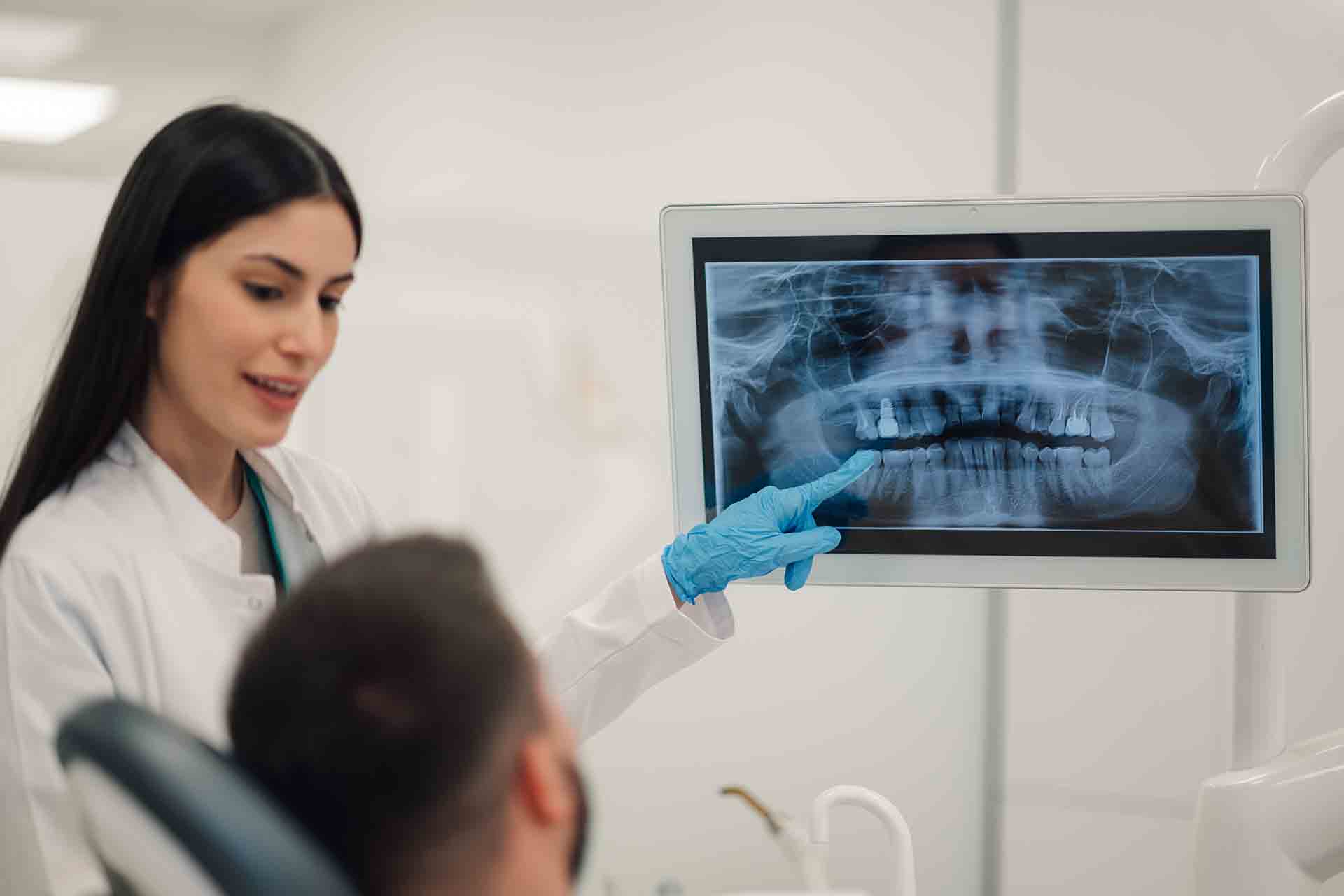
A Complete Guide to Restoring Damaged Teeth in New York
January 2026Key Takeaways:- Restoring damaged teeth is more reliable than ever with modern dentistry Early treatment helps repair damaged teeth before problems progress Damaged enamel restoration focuses on mineralization and protection, not true regrowth Restorative ...
Preventive Dental Care Trends in 2026: Early Detection & Smart Care
January 2026Key Takeaways:- Preventive dental care trends in 2026 are all about catching problems early and tailoring care to each patient Digital diagnostics and smart oral devices make proactive dental care easier than ...
Is Professional Teeth Whitening Worth the Cost in New York?
January 2026Key Takeaways Professional teeth whitening delivers faster, longer-lasting results In-office treatments are safer than over-the-counter kits Whitening improves confidence and smile appearance Dentist-guided whitening reduces sensitivity risks Results typically last 6–12 months with good care Professional ...

We speak different languages